

Coloring pages and dyslexia – how they support your child

Does your child quickly get discouraged when they have to write, read, or copy from the board? With dyslexia, dysorthographia, or ADHD, learning often requires more patience, shorter tasks, and carefully chosen activities. Coloring pages and dyslexia is a topic worth approaching practically: not as a promise to “fix” difficulties, but as calm support for everyday exercises.
Coloring engages vision, hand movement, planning, crayon pressure, and attention. The child sees a line, guides their hand, decides on a color, and observes the effect of their work. It’s a simple activity, but when chosen well, it can become a mini-workout for concentration, hand-eye coordination, and a sense of agency.
The biggest advantage of coloring pages is that they don’t look like schoolwork. A page featuring a favorite animal, vehicle, letter, or mandala gives the child a safe start. There’s no need to immediately write a whole word, read a long text, or fight the pressure of being graded.
Coloring pages and dyslexia – support, not a miracle cure
Developmental dyslexia is most commonly associated with difficulties in learning to read and write. The child might confuse letters, recognize written words more slowly, lose the order of characters, or get tired more quickly when working with text. Dysorthographia primarily affects writing accuracy, so a child may know the rule but still make spelling mistakes.
Coloring pages do not replace a diagnosis, educational therapy, or working with a specialist. However, they can create a friendly background for practicing skills needed for learning. Especially when an adult selects the designs mindfully and doesn’t turn coloring into another test.
With dyslexia, multisensory learning is key. A child remembers better when they can see a symbol, touch the paper, move their hand, say the name, and connect the letter with an image. That’s why educational coloring pages featuring letters, shapes, and simple scenes can be a great addition to daily practice.



What does a child practice while coloring?
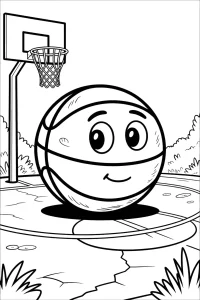
While coloring, a child performs many small actions simultaneously. They have to hold the crayon, control the pressure, follow the outline, and choose where to start. It’s a natural workout for functions that later come in handy for writing, cutting, drawing patterns, and working in a notebook.
- hand-eye coordination, meaning guiding movement according to what the child sees,
- fine motor skills, especially fingers, wrist, and grip precision,
- spatial orientation on the page, meaning understanding top, bottom, left, and right,
- motor planning, because the child has to decide how to fill a space,
- concentration, patience, and finishing a started task.
It’s not about a perfectly colored picture. For a child with learning difficulties, a calm process can be more valuable than a perfect result. If the page is associated with success, the child is more willing to return to subsequent exercises.
Sensory integration at the coloring table
Sensory integration refers to the way the nervous system receives and organizes stimuli. For some children, the problem is an overload of sensations; for others, it’s a weak sense of movement, pressure, or body position. During coloring, these stimuli appear in a mild, predictable form.
The child feels the texture of the paper, the resistance of the crayon, the movement of their hand, and the pressure of their palm. They see the trace of color, hear the gentle friction of the crayon against the paper, and can regulate their working pace. This is not sensory integration therapy in itself, but it can be a calming sensory exercise at home or in the classroom.
If the child dislikes messy materials, classic crayons might be a safer start than paints. If they need stronger sensations, you can choose wax crayons, thicker paper, or larger areas to fill. The choice of tools is very important because a crayon that is too thin can quickly tire the hand.
How to choose tools when the child gets tired quickly?
First, observe the grip and hand tension. If the child grips the crayon very tightly, frequently takes breaks, or complains of hand pain, choose a shorter session and a thicker tool. Triangular crayons, wax crayons, pastels, or markers with a bold mark work well.
- To start, choose a single page and limit the number of colors to 3–5.
- Give the child a design with large areas and clear outlines.
- After a few minutes, suggest relaxing the hand, shaking the fingers, or doing a quick stretch.
- Don’t correct every slip outside the lines if the child is working hard.
At home, you can start with simple materials like printable coloring pages for kids in PDF. In school or preschool, short tasks work well at the beginning of classes when a child needs a calm transition into work.
Hand-eye coordination – why is it so important?
Hand-eye coordination helps a child translate visual information into movement. When a child colors a small element, their eyes follow the outline, and their hand tries to make a precise movement. The same mechanism comes in handy later when writing letters on lined paper, copying from the board, and arranging elements on a page.
For a child with dyslexia or graphomotor difficulties, simply saying “write more neatly” usually doesn’t help. The hand might not keep up with the eyes, and the eyes might lose their place on the page. Coloring allows them to practice this area without constant contact with spelling mistakes or school grades.
From large areas to fine details
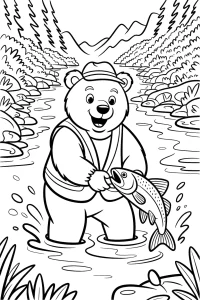
A good difficulty level is one where the child has to try a little bit but doesn’t give up after a minute. Start with larger surfaces, simple outlines, and one main character. Only later should you introduce small details, patterns on clothes, leaves, stars, or a decorative background.
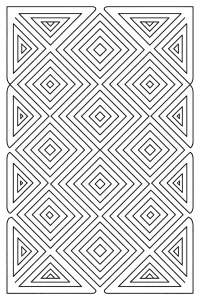
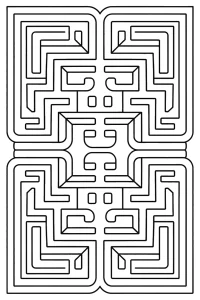
In practice, you can create a simple progression: first an animal with large areas, then a character with a few details, and finally a mandala or an alphabet with decorative letters. For older children, printable mandalas for kids are a good choice because the repetition of the pattern makes it easier to maintain a working rhythm.



Direction, space, and page orientation
Dyslexia can be accompanied by spatial orientation difficulties. A child might sometimes confuse similar symbols, reverse directions, or lose their place in the text. A coloring page provides an opportunity for calm conversations about the placement of elements: “color the star above the house,” “find the flower on the left side,” “start with the biggest circle.”
Such instructions don’t have to sound like a lesson. You can turn them into a detective game or a search for details. The child then learns words describing space while simultaneously practicing visual scanning of the page.
Concentration without pressure, especially with ADHD
ADHD can be associated with difficulty maintaining attention, impulsivity, or a high need for movement. Not every child with ADHD will enjoy sitting calmly at a table. Therefore, coloring should be short, flexible, and adapted to the child’s current capabilities.
A small goal works best instead of a long task. Instead of saying “color the whole page,” you can suggest: “choose three elements” or “color only the character.” The child then gets a clear end to the work, which reduces tension and makes it easier to start.
Coloring with ADHD – short sessions step by step
With ADHD, a rhythm works great: start, action, break, return. A session can last 5–10 minutes and still be meaningful. It’s better to end it at a good moment than to drag it out until the child gets angry or destroys the page.
- Set one small goal, for example, “let’s color just the rocket.”
- Remove excess stimuli from the desk: toys, phone, tablet, and random papers.
- Allow the child to stand at the table if it’s easier for them to work that way.
- When finished, praise the specific effort, not just the result.
If the child responds well to evening wind-down routines, a consistent ritual as described in the article coloring before bed instead of screen time can be helpful. For highly active children, such a ritual should be short and predictable.
Collaborating with a speech therapist, educator, or therapist
Coloring pages can be an interesting addition to working with a speech therapist, special educator, occupational therapist, or teacher. A specialist can help choose the difficulty level, point out graphomotor exercises, and assess if the child needs additional support. A parent doesn’t have to decide alone whether the difficulties are “normal” or require a diagnosis.
Practical tip: while coloring, observe not only the result but also the process: the grip, hand tension, working pace, and reaction to mistakes. Such signals can help in a conversation with a speech therapist, educator, or occupational therapist.
If you are collaborating with a specialist, you can ask them to suggest the best designs for your specific child. Sometimes large areas and thick outlines will be needed, and other times exercises focusing on direction, sequence, or precise movement. This way, coloring will become part of broader, gentle support.
When is it worth seeking a specialist’s help?
If the child constantly avoids drawing, gets tired very quickly when writing, grips the tool tightly, or reacts with crying to table tasks, it’s good to talk to a specialist. The same applies when difficulties in reading, writing, or concentration persist despite regular support at home and school.
It’s not about labeling the child. It’s about understanding why learning is so exhausting for them. Early support can save a lot of frustration and help choose exercises that truly fit the child’s needs.
How to choose a coloring page for a child with learning difficulties?
The safest bet is to start with the child’s interests. If they like dinosaurs, vehicles, or animals, pick that exact theme. Motivation is key, because a child with learning difficulties often has many experiences where things “didn’t work out.”
Simple technical criteria also help with the choice. Younger children and children whose hands get tired quickly need large areas. Older children can use more detailed designs, but only when they are ready for it themselves. The guide on how to choose a coloring page for a child’s age might also be useful.
- To start, choose clear outlines and a limited number of details.
- Avoid small patterns if the child gets frustrated easily.
- Print a single page instead of a whole set at once.
- Give choices, but keep them limited: “do you prefer the cat or the rocket?”
- Praise strategy, patience, and returning to the task after a break.




A home coloring ritual – a simple 15-minute plan
Consistency yields the best results, but don’t overdo it. A short ritual 2–3 times a week can be more helpful than a long session once a month. A child needs repetition, not a constantly raised bar.
- Choose one coloring page and 3–5 colors together.
- Set a small goal, for instance, one character or one piece of the background.
- Color for a few minutes without correcting every detail.
- At the end, ask the child what was easy and what was hard.
- Put the work in a visible spot so the child can see the result.
Such a plan can be used at home, in an after-school club, a counselor’s office, or during remedial classes. It works best when the adult doesn’t compare the child to others and doesn’t turn coloring into a neatness test.
Coloring can be a small step toward greater confidence
Coloring pages and dyslexia is not about a miracle cure, but about wisely supporting a child through everyday difficulties. A well-chosen page can exercise the hand, vision, concentration, and calmly finishing a task, while also giving the child a sense of success.
The most important things are a pace tailored to the child, a kind reaction from the adult, and a readiness to cooperate with a specialist when difficulties are severe. Start with one simple page and see which designs help the child work most calmly.
If you want to start with friendly materials, choose free printable coloring pages that support concentration and learning and treat them as a calming element of everyday play.


